Bringing Rituals Back Into Dungeons & Dragons

Ritually Speaking: 4 ways to bring the magic back
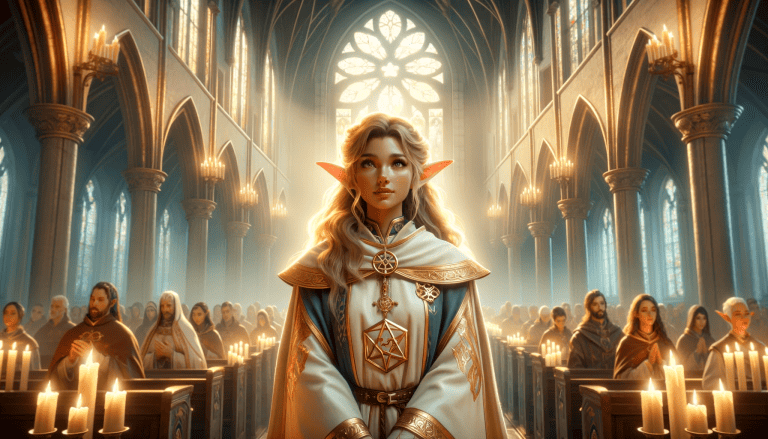
Barret bowed his head for a moment, as did all of them, then raised his emerald eyes heavenward to a crystal sphere suspended from the center of the dome by a long, golden chain. The sphere trembled slightly in the still, silent air, and when Barrett spoke it was in the low, liquid syllables of ancient Deryni ritual.
“Now we are met. Now we are one with the light. Regard the ancient ways. We shall not walk this path again.” He paused and lapsed back into the vernacular. “So be it.”
-from High Deryni, by Katherine Kurtz
Rituals. They’re something to interrupt. Something that the bad guys are right in the middle of when those meddling PCs arrive on the scene. And, really . . . for a lot of D&D games out there being played right now, that’s about it.
The frustration is that ritual magic is the sort of magic that really matches the literary magical traditions that are out there. 4E D&D has been a huge revelation in game play in combat encounters, and the skill challenge system. When well used can turn an unstructured RP scene into another challenging game segment of your adventure, but Rituals are the old non-adjustable wrenches in the DM’s toolbox. They don’t get used often, and settle down to the bottom of the pile.
When you get right down to it, Rituals are hard to use. As an adventure writer, especially preparing an adventure where you have no way of knowing what sort of PC classes will try to complete your adventure, using a scene that requires a ritual to complete creates a roadblock that some parties will have no way of passing, and other parties will breeze past without thinking about it. As a writer, then, you avoid using them because they just complicate your adventure in ways that don’t improve the game experience for the players.
If you’re a DM, your situation isn’t really much better. You may have a PC who has decided to invest in ritual magic. And, really, to reward that player, you want to make sure that you prepare situations where that PC will have the opportunity to use those rituals.
And now, Martial Power 2 has brought Martial Practices to the table, giving us a very martial, non-magical sort of rituals that your PCs can invest in and complete. before that we had Alchemy, another variation on the theme. But in a game that really rewards players for making combat monsters, it’s hard to get your players to invest much in Rituals — which then makes it hard to use them in the game.
A couple of house rules could make it a lot easier for your players to get engaged in rituals.
1. Napster for Rituals.
All you really need to do is eliminate the cost to copy a ritual into a spellbook. Require an arcana check based on the level of the spell (try DC = 15+1/2 ritual level). Now, Certain NPCs may still charge for access to the ritual to be copied, but PCs can copy freely from each other’s books, from captured books, and so on. This eliminates much of the cost of trying to collect rituals.
Once PCs can share rituals around, gain new rituals for free from allies and friendly sources, the number of rituals available to them will grow, making it more likely that they will have the right ritual on hand when they need it.
Optionally, if this seems to be too free-flowing, you might limit this to just exchanges within power sources or even within classes. It’s easy to imagine that a ritual cast by a primal character would look very different from one cast by an arcane character; it might also help bring out the flavor differences of the classes if rituals were class-specific. After all, a warlock draws his power from a pact with a powerful being, a wizard manipulates elemental energies, and a bard weaves music. The methods by which they cast and complete their rituals should be just as distinctive as their other powers.
2. Some Rituals are Skill Challenges
One of the tricks with skill challenges is that they don’t engage the player enough in the process of completing them. Some, but not all skill challenges require skill checks, and that’s just a single roll. By making some rituals a skill challenge, you can bring some of the game back to rituals.
I wouldn’t do this for every ritual — it could become tedious quickly. But rituals within 2 levels of the caster’s level would be new and difficult enough that the caster would need to complete a skill challenge to complete the ritual. A ritual that requires a skill check to determine the effect could either use the highest roll from the skill challenge, or the final roll to determine the effect of the completed ritual.
3. Creative Ritual Magic
Imagine that ritual magic is like music. Musicians are not limited to the melodies and compositions in their scores — most can and do improvise, either creating variations on a theme or entirely new pieces. Ritual magic might very well work the same way.
Allow your PCs to invent variations on the rituals they already know to achieve new results. For example, taking a simple ritual like Tenser’s Floating Disk and allowing your players to invent variations on that idea (a disk of force) could suddenly present a wide variety of variations. A young wizard could create a movable barrier, for example, that could provide cover, block windows, and so on. This will require that the DM be willing to make some rulings on the fly, but with a few typical mechanics (+2 to the DC of any skill checks made for difficulty, etc) the mechanics are there to help DMs make those seat-of-the-pants rulings.
4. Just Do It.
The bottom line is this. Until we start to create the situations in our games that actually require rituals, we’re not going to see players embracing ritual magic as an important part of playing a spellcaster. Start small — don’t create situations where the PCs can’t succeed at the adventure without the ritual, but limit their success. Hold back a treasure parcel, for example, unless one of the PCs can come up with a passwall ritual.
In the end, these may not be the best ideas in the world, and odds are they won’t all fit into your game. With the idea that ritual magic, magic that takes time and effort and skill to complete, such an important part of the fantasy genre, it only makes sense to try to make an effort to make rituals a more important part of our games.
This post contributed by John P. Jones.
“John has been a player and DM/Gamemaster since the first edition of D&D. He pays the bills as a web and new media developer in Kansas. He posts in online gaming communities as Radiating Gnome (radiatinggnome.com), and is a member of EN World’s Rat Bastard Dungeon Masters club.”