
Question Keith #7: Death & The Player Character

Q: I’m a soft-hearted DM and I never know how to handle player death. Any advice?
(Cassie from Austin)
A: This relates to a number of the questions from previous months—how to make combat interesting, what to do when things take an unexpected turn.
As DM you hold the player’s lives in your hands. At its most obvious level, you have the DM’s screen and the power to lie about what happens on your sides. You can always choose to ignore a critical hit or to turn a hit into a miss. At the end of the day, a character will only die if you choose to kill them.
With that said, by the time you’re lying about dice rolls, you’ve already passed by a number of tools that control the fate of your PCs.
Intelligence and Story. Whether you’re the DM or a player, one of the greatest challenges of roleplaying is playing a character or creature that is significantly smarter or less intelligent than you are. When you look at an encounter group, you may see a particular combination of abilities that are ruthlessly effective. However, that doesn’t mean you HAVE to use those abilities to their fullest potential. It may be clear to you that the proper strategy is to focus fire on the weakest PCs… but perhaps the mighty bugbear will see the scrawny wizard as an unworthy foe, and choose to challenge the fighter instead. The kobolds may have backstabbing abilities that make them an excellent team… but perhaps this group includes kobolds from two feuding clans that refuse to help one another. These sorts of decisions also serve to add flavor to encounters and differentiate between different species and cultures. If you were playing Chess, you’d use every piece to its fullest ability. But in my opinion, what differentiates an RPG from a tactical wargame is that there is story—and the story may keep your pieces from acting at full efficiency.
Equipment and Damage. You’re running an encounter for first level characters. You create an orc fighter. He’s a fighter, so you give him what you’d take if you were making a fighter PC… say, plate armor and a greataxe. Of course, if he hits with that greataxe, he has a 60% chance of killing any of the player characters with a single blow. So? The players have the same tools, right? This is just what a first level fighter looks like.
That’s true… but it doesn’t HAVE to be. Yes, if you were making a PC fighter, you might take the heavy weapon. But this isn’t a PC. He’s not one of the main characters in the story. He’s not even an important villain. He’s just a random orc with a pie. If you don’t want him to kill PCs in a single blow, well, maybe he just loves big knives—a choice no PC fighter would make, but this is a sociopathic orc and it happens he loves skinning people with knives. Another option is to say that weapons simply don’t deal as much damage in the hands of NPCs as they do for PCs. It doesn’t matter what the weapon is; whenever an orc thug hits an opponent, they will deal 4 points of damage. If the player picks up the weapon, it will do 1d12+Str – but that’s a reflection of the player’s skill, and the orc doesn’t have it. This lets you have a clear, concrete idea of just how many hits a character can take, and to know that the orc can kill the wizard in one shot but will need three hits to take down the fighter… as opposed to using a 1d12+2, which leaves things completely unpredictable.
So you can always choose to lie. But you’re also setting up the odds when you decide how much damage the enemies can inflict on the PCs and how effective their tactics will be. So if you like to let the dice fall where they may, you can still set things up so the encounters that are most likely to kill the characters are the ones that FEEL dramatic. Really, the key point here is that Your NPCs aren’t player characters. The story isn’t about them. As a result, you don’t have to equip them or play them the same way you’d handle a player character of your own… and making these sort of choices will help to differentiate encounters.
Having said all of that, we come to a critical question: What is the point of death in your campaign? Why is the threat of death important? For me, the main purpose of having a meaningful risk associated with defeat is that it makes victory mean something. If the heroes can’t lose, then why bother having fights or challenges in the first place? However, the flip side of this is that defeat doesn’t have to mean death… it just needs to carry consequence. Consider the following house rule.
When a villain reduces a PC below zero hit points, the villain decides whether or not the injury is lethal.
Aside from this, you can keep all the standard rules for your system. The PC can “bleed out” and in 4E they will have to make death saving throws each round. When they reach the state that should indicate final death, they either die or pass into a state where no magic or skill can restore them for the duration of the combat. So in 4E, a PC who fails three death saves caused by a nonlethal injury no longer makes death saves each round, but they also can’t be woken up with a Healing Word. Reviving the character will require a short rest and attention from either a character with healing magic or training in the Heal skill; if this doesn’t happen, you decide if the character recovers or dies, based on the nature of the injury.
Once you’ve established this rule, the next question is what the default state is. It could be that all wounds are lethal unless the attacker makes a special effort to spare the victim. But it could be that people only die if the attacker makes sure it’s a mortal wound. Imagine that the PCs are guarding a caravan and bandits attack. The bandits don’t actually care if the PCs live or die, they just want these guards out of the way so the path to the loot is clear. Essentially, if defeat has clear consequences – the caravan is robbed, the king is killed, the magic artifact is stolen – it may not matter if the PCs die. An initial defeat can actually make the ultimate victory over a colorful villain more satisfying.
Looking to consequences, you can also consider permanent or semi-permanent impacts on the characters. For example, a villain might spare a hero’s life but leave him with a dueling scar or take a family signet. However, I wouldn’t do this sort of thing unless you’re sure your players will enjoy it. For some people, this creates a satisfying thirst for vengeance; but others would rather have a clean death than feel that their character has been humiliated.
Beyond this, my main advice is this: if you’re going to kill a character, have it MEAN something. When my character is killed in a random encounter with a first level orc with a greatsword, I don’t feel like a hero. But when my character gives his life to hold the gates of Moonwatch against the Duke of Frozen Tears, buying time for the wizard to complete his spell? In that case, I’m OK with it. Especially if there is lasting impact of some sort. Perhaps they raise a monument to me, or say that my spirit infuses the city gates and protects them against future enemies. For me, the ultimate test is this: if I saw this death in a movie, would it make sense? Or would I walk away saying “I don’t get why they killed the ranger in that random bar fight”? If it’s the latter, I’d consider one of the alternatives suggested above

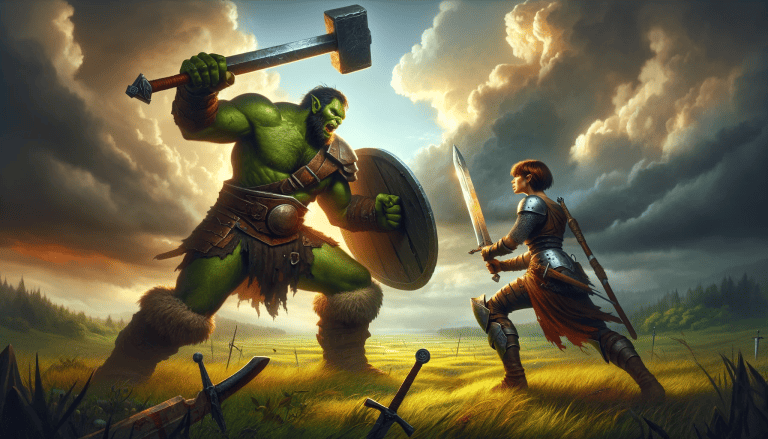
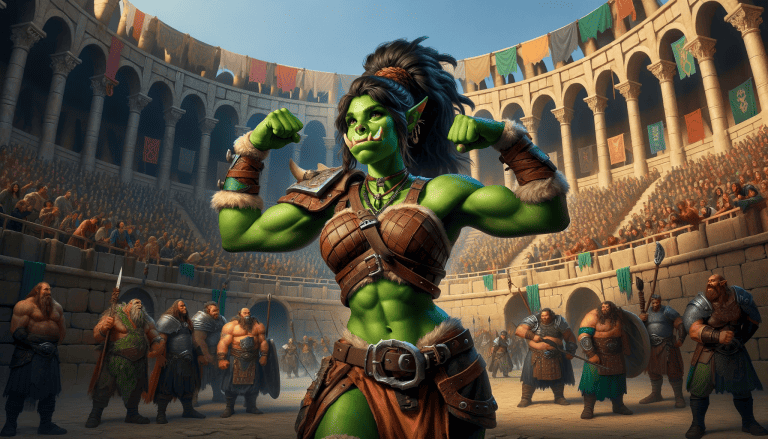
My preferred option is always to let the player decide what his or her PC’s death means. You say that you should let death mean something, but how can the DM decide what the PC’s death should mean to the player?
This may sound strange, so let me explain. When a PC ordinarily should die I instead use a double jeopardy rule. This means that the player can choose between death and another potentially worse outcome. For instance,
The players are asked by a bunch of villagers to capture or slay a tribe of orcs who’ve been raiding their lands. In the face-off, one of the PC’s is ‘killed’. According to the double jeopardy rule, the following happens instead:
The orc chieftain holds his sword to the barely conscious PC’s throat and commands the rest of the party to surrender or retreat.
Now, the player can choose either to let the PC die rather than fail the quest, or the PC can live and suffer the dire consequences. Some possible examples of what these dire consequences might be are:
– The orc chieftain tells the party that he’ll let the PC live if the other party members return to the village and destroy it.
– Once the party has left, the orc chieftain chops off the PC’s hands (if a warrior type PC) or cuts out the PC’s tongue (if a wizard type PC) and leave the PC for dead. The PC will have to continue as a different class to keep adventuring.
– The orc chieftain makes the party surrender and sells them into slavery.
– The PCs are forced to join the orcs on a dangerous quest to infiltrate and conquer a nearby fortress.
These are just a few examples, but I find this rule to be far preferable to any of the other alternatives I’ve encountered. It serves as a device to enrich the storyline, as well as maintaining the feeling of importance to players’ choices.
PC death I still find is sometimes unavoidable, such as when players willingly risk death to achieve the impossible, for example, the party is sent on a quest to steal the dragon’s hoard and foolishly decide to challenge the near-invincible dragon, or a player buys a ‘potion of flying’ from a dodgy merchant and jumps off a cliff. You just can’t make exceptions for stupidity.
I’m not too experienced as a DM, but I agree with Keith in that character deaths should mean something. For example, I built a magical item that let the monk PC gain powered strikes for the cost of temporary life gain. It would be fine if he died of artificial old age if he gave the final, killing blow to the campaign-end boss and saved everyone. However, instead the other PCs mind controlled him and used him as a suicide bomber. That death was very unsatisfying, so Kord saved him at the price of a quest.
Also, I don’t think it’s wrong to kill players if they bring it upon themselves. If a PC flings himself off a tower expecting his god to save him in his stupidity, let him die.
While it is all good to convert a hit to a miss to avoid killing off one character, it would be obvious to my players if an NPC was beating them badly and all of a sudden started doing terrible. To compensate for this, I try to anticipate and do something similar to the NPC’s deal less damage, however I find this takes away too much the threat of player death. Do you have any suggestions as to finding a balance to these modifications?
I have to respectfully disagree with this answer, but not entirely.
Death does not carry the same weight in a cinematic game as it would in a game where it IS possible to die in a random bar fight or against a first level orc! The players will come to expect invulnerability even if they’re mature enough to roleplay characters that do not, and it could even lead to disagreements later on over what constitutes a “reasonable situation to die in.” Keith’s an excellent DM, and I’m sure that he knows his players very well, so it’s unlikely that this would happen for him, but I have different advice for the softhearted DM.
If you don’t feel comfortable dealing with player death, you don’t have to. And when I say death here, I mean the loss of a character for the player, specifically. Any setting where the party can revive the character with relative ease should be fine for even the most diehard opponents of character death. Something touched upon in the answer that really strikes true in my experience is that defeat doesn’t have to mean death. I’ve run games with players that crafted such elaborate characters with all the effort they were willing to expend for whom character death would have meant leaving the game entirely, and the simplest solution is to find interesting alternatives to death.
Unconsciousness is our first go-to effect here, and some might argue that it’s worse than death in many cases. The player is unable to play the character, yet isn’t able to roll up a new character in the meanwhile. A simple solution is to let the player take control of one of the party’s retainers for a time, if it’s an issue! One of my favorite “deaths” is petrification/paralysis that can be cured by the blood of the monster who caused it. I enjoy it so much, because it expands the player’s view of the setting as a “real place” with “real, functioning rules” that differ from our own. The sky’s the limit, and there are hundreds of defeat-situations you could come up with as the DM!
This is all just assuming battles with “no stakes”, too, such as random encounters for making too much noise, sleeping in dangerous areas, etc. Any situation with weight behind it will generally have something the party is attempting to succeed at. The failure to succeed is generally a very potent motivation for winning a battle and easily will be high on the players’ considerations. Losing the battle could mean that the players don’t succeed at getting inside a structure, or a villain successfully kidnaps or slays someone the party was protecting. An advantage of these death-less games, is that players will be motivated by these failures to try again, and since they’re still playing the same characters, there’s no confusion about why the new adventurers decided to get revenge for the old.
All in all, I cannot stress enough that the DM is a player too, and if the DM is not comfortable with something, they should not be required to do it.
I’m an avid reader here at dungeonmastering and I’ve been a Dungeon Master myself since I was a wee lad. As Cassie noted, it sucks to kill off player characters, especially when so much time and effort was spent in creating them. As any experienced DM will tell you, death is a crucial part of the game system and players truly should be afraid that it can happen to their characters. BUT! I offer a few extra words of wisdom:
As the DM, you ultimately have the decision making power here. So one rule I play with when I’m DM’ing with my friends is that at 0 health, the player makes a saving throw and if they fail, they go completely unconscious. IF the player reaches -10, NOTHING of this or any world could EVER save you. Like so many other DMs, I encourage and emplore my players to experiment and try unique things, like jumping up and swinging from a chandelier to land behind an enemy and stab them in the back. Unique and “thought out” decisions from the PCs I reward. Unfortunately, this leads these characters to sometimes nasty fall-outs. Just because they want to try something difficult, doesn’t mean they won’t suffer for it. Anyway, to balance out these untimely ends, I have also pre-made Death scenarios. For example: You have one friend who is playing as an orc warrior and he is felled by an arrow that crit right into his eye socket. Bleeding out he gasps his last breath and falls dead. I let an entire turn or two go by to really let the death of that character sink in before I’ll pull out a ready death scenario (IF and only IF, I feel the character truly deserves it): The pool of blood around the orc suddenly turns an eerie shade of putrid green and forms the shape of a humanoid above the orc, except the left arm curves where the forearm should be like a huge scythe. The scythe arm points at the orc, and like melting butter, the orc slowly disintegrates and dissappears, followed by the scythed blood humanoid. And that’s it. I won’t tell them anything else. After the battle is over, they can make skill checks or travel the local towns to try and figure out what that scene meant, if anything. If the characters are truly entrigued and are willing to explore. They may infact find a way to bring back this character. Not to mention there may be several consequences when they do, like, maybe the scythe blood creature will speak into the orcs ears for the rest of his ‘living’ life and force him to attack at certain times when he otherwise wouldn’t.
The point is, TAKE CHARGE. And take charge in a FUN way. You obviously know your players better than we do. I play with a bunch of ~25year olds who drink usually excessively while we play. I throw curve balls at them like it’s my job and they LOVE it. Just make sure you’re not predictable. We all love this game but at the end of the day, the players know YOU as a person and know what YOU want, so they’ll try sometimes to act towards those decisions which will benefit them. This is cheating! Sorry for the diatribe, just wanted to give you a fun example of an alternate idea.
-Jake
I have to say that I agree with this. Death of a character should really mean something, both to the story and the player. Killing characters in meaningless, random ways just encourages your players not to invest in their characters. The risk of death should always be there…. if there is a catastrophic failure. Otherwise, like Mr. Baker said, it is perfectly acceptable to leave scars or steal a personal treasure.